Protect Your Customers and Your Kitchen with the Right Thermometer
From cooking to cold storage to health checks, using the right thermometers keep food safe, consistent, and compliant.
In foodservice, guessing temperatures is risky, expensive, and unnecessary. The right thermometer toolkit
lets you verify cooking, holding, storage, and even guest or staff health quickly and accurately. Use this guide to
choose the best thermometer for each job in your operation.
Digital Meat Thermometers
Perfect for: Line cooks, grill stations, roasting, reheats
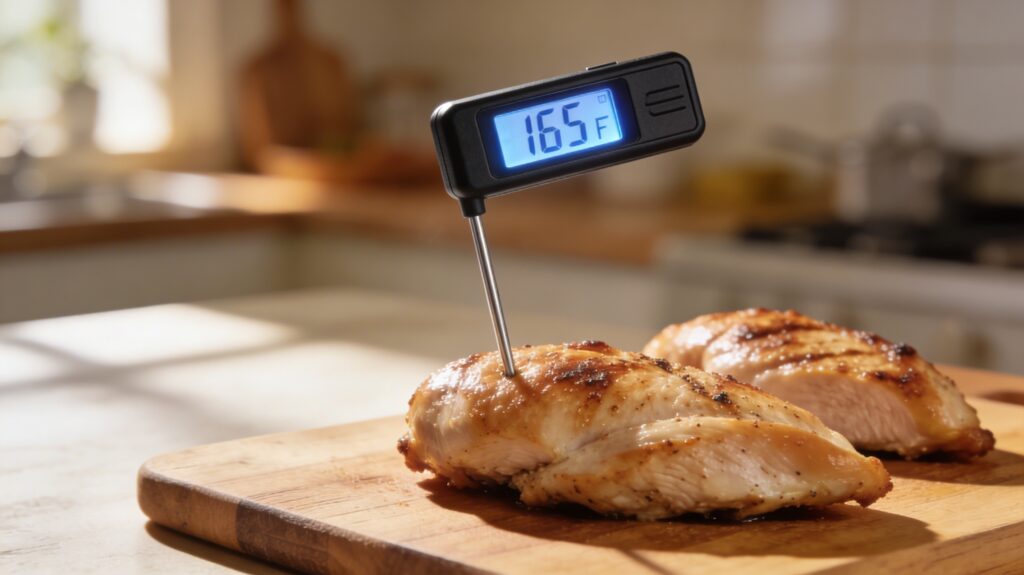
- Fast, accurate internal temperature readings for meats, casseroles, and reheated foods.
- Thin probe and bright digital display for easy reading on a busy line.
- Quick response time helps you hit safe cooking temperatures without overcooking.
- Ideal for checking chicken, burgers, roasts, and hot‑held items.
Shop digital meat thermometers →
Infrared Forehead Thermometers
Perfect for: Health checks, families, schools, clinics
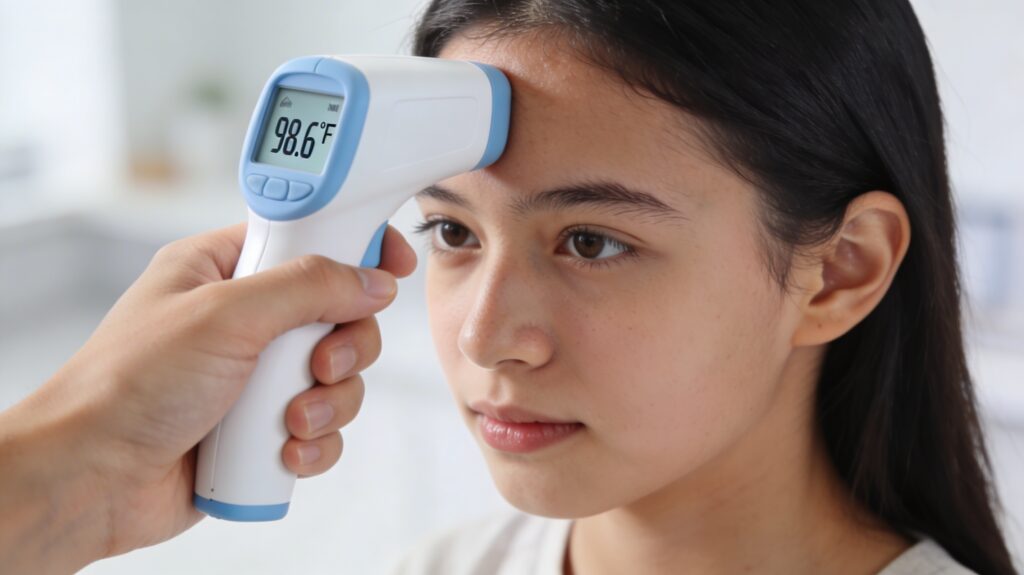
- Non‑contact readings from the forehead in just a second.
- Helps you screen for fevers while minimizing contact.
- Easy‑to‑read backlit screens and color indicators for temperature ranges.
- Memory for past readings to track changes over time.
Shop infrared forehead thermometers →
Infrared Cooking Thermometers
Perfect for: Griddles, buffets, hot‑holding, delivery and catering
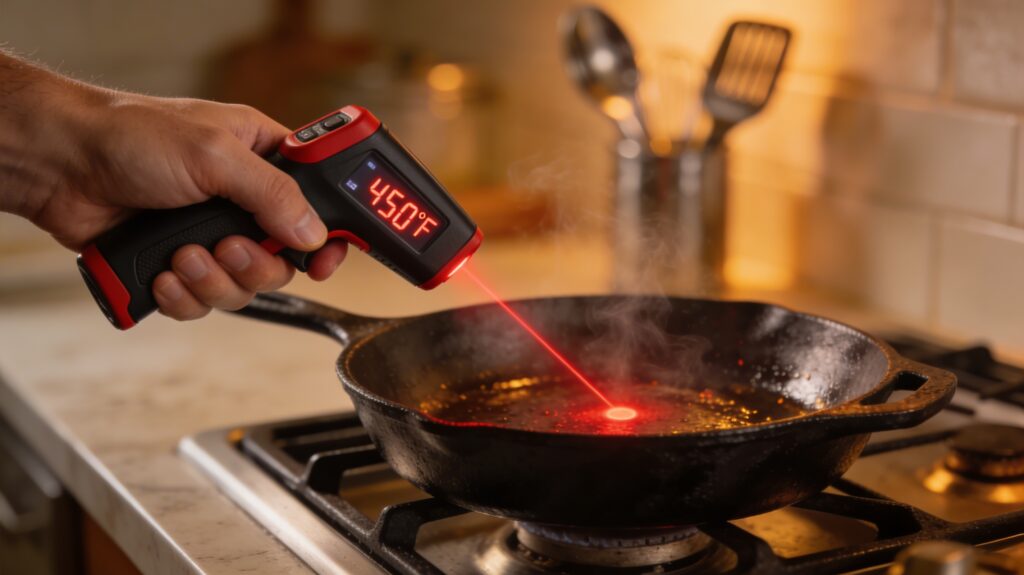
- Point‑and‑shoot surface temperature readings with no contact.
- Instantly verify hot‑holding temperatures on pans, buffet lines, and delivery bags.
- Great for checking griddle and flat‑top temps before service.
- Helps you identify hot and cold spots so food heats evenly.
Shop infrared cooking thermometers →
Bi‑Metallic Stemmed Thermometers
Perfect for: Everyday checks, prep areas, budget‑friendly setups
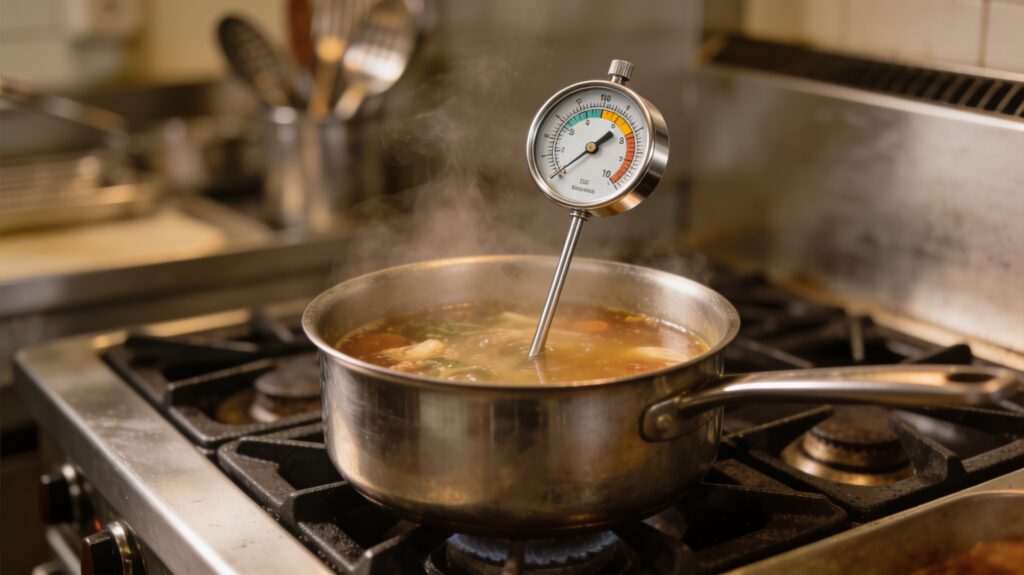
- Classic dial design that doesn’t need batteries.
- Durable and inexpensive, ideal for high‑volume kitchens.
- Great for checking soups, sauces, bulk foods, and thicker items.
- Easy to calibrate using ice‑point or boiling‑point methods.
Shop bi‑metallic stem thermometers →
Fridge & Freezer Thermometers
Perfect for: Walk‑ins, reach‑ins, prep coolers, freezers
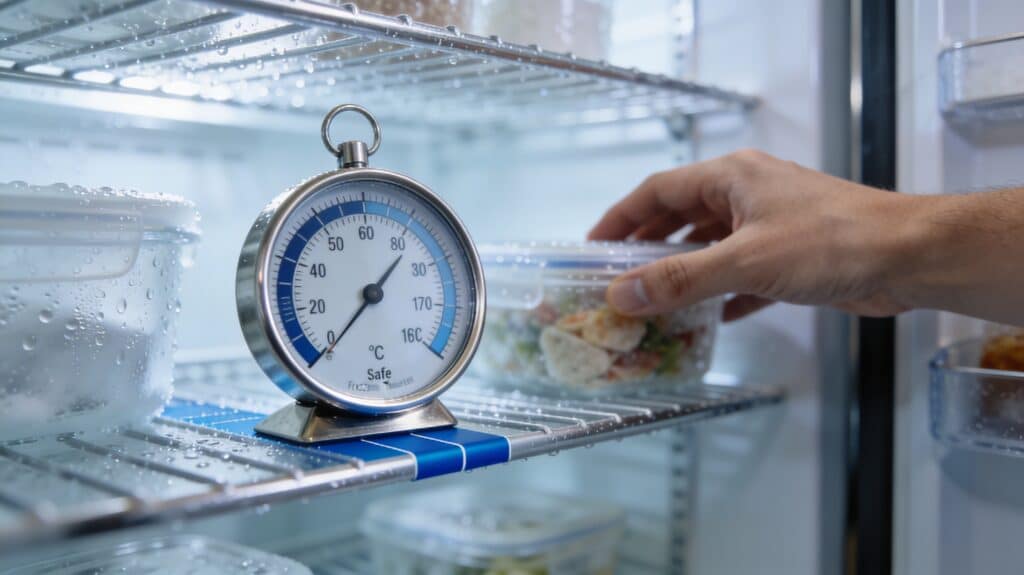
- Designed to monitor cold storage so food stays out of the danger zone.
- Large, easy‑read dials or digital displays for quick checks.
- Many models track min/max temperatures so you can spot problems early.
- Helps document safe storage temperatures for inspections and HACCP logs.
Shop fridge & freezer thermometers →
Timer Thermometers
Perfect for: Roasts, turkeys, smokers, long cooks
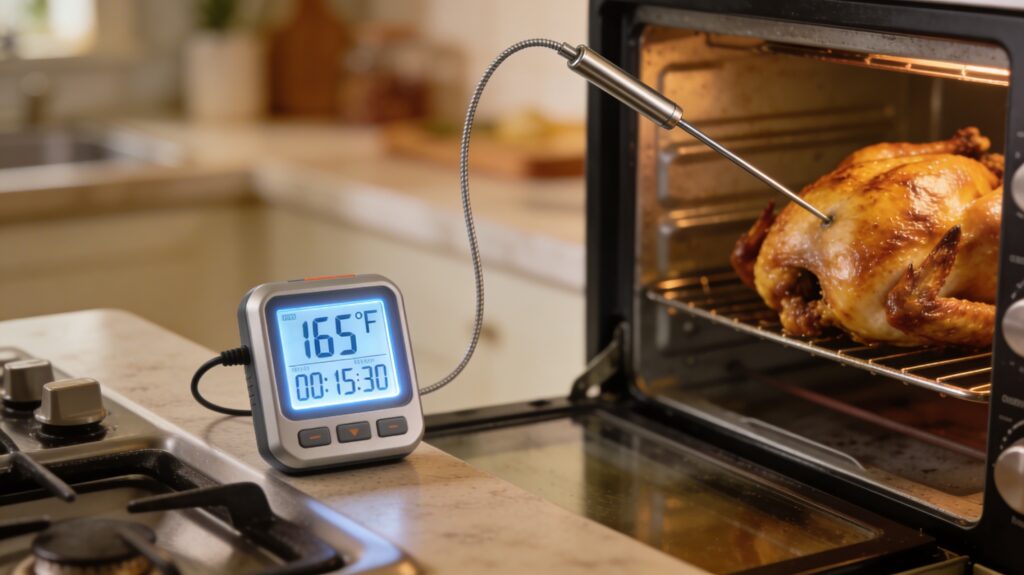
- Probe stays in the food while it cooks; display stays outside the oven or smoker.
- Tracks both internal temperature and cooking time at once.
- Programmable alarms let you know when your target temp is reached.
- Excellent for large roasts, turkeys, prime rib, and low‑and‑slow barbecue.
Build Your Thermometer Toolkit
To cover every critical control point in your kitchen, aim for a small but complete thermometer set:
- 1–2 digital meat thermometers for line checks and cooking.
- 1 infrared cooking thermometer for surfaces and hot‑holding.
- Several bi‑metallic stemmed thermometers for backup and prep areas.
- 1 forehead thermometer if you also handle health screening.
- 1–2 fridge/freezer thermometers for each cold‑storage unit.
- 1 timer thermometer for roasts, smokers, and long cooks.
Ready to upgrade your thermometer lineup?
Browse our recommended thermometers and choose the tools that keep your food safe, your guests protected, and your operation inspection‑ready.
Thermometers – Frequently Asked Questions
What type of thermometer is best for checking meat temperatures?
A digital meat thermometer is the best choice for checking internal temperatures of meats, casseroles, and reheated foods. It provides fast, accurate readings with a thin probe and bright digital display, making it ideal for busy kitchen lines.
What is the difference between an infrared thermometer and a probe thermometer?
An infrared thermometer measures surface temperatures without touching the food, making it ideal for griddles, buffet lines, and hot-holding. A probe thermometer is inserted into the food to measure internal temperature, which is necessary for verifying that meats and other items have reached safe cooking temperatures.
Do I need a separate thermometer for my fridge and freezer?
Yes. Fridge and freezer thermometers are specifically designed to monitor cold storage temperatures and help ensure food stays out of the danger zone (41°F–135°F). Many models track minimum and maximum temperatures so you can spot problems early and document safe storage for inspections and HACCP logs.
What thermometers should a foodservice operation have?
A complete thermometer toolkit should include 1–2 digital meat thermometers for line checks and cooking, 1 infrared cooking thermometer for surfaces and hot-holding, several bi-metallic stemmed thermometers for backup and prep areas, 1–2 fridge or freezer thermometers for each cold-storage unit, and 1 timer thermometer for roasts, smokers, and long cooks.
How do I calibrate a bi-metallic stemmed thermometer?
Bi-metallic stemmed thermometers can be calibrated using the ice-point method (submerge the stem in ice water and adjust to 32°F / 0°C) or the boiling-point method (submerge the stem in boiling water and adjust to 212°F / 100°C at sea level). Regular calibration ensures accurate readings.
As an Amazon Associate I earn from qualifying purchases.