Food Safety, Food Security, and Food Defense: How They Work Together
Understanding food safety, food security, and food defense is essential for anyone working in the food industry or supporting community health. These three concepts answer different questions: Is the food safe to eat, is there enough food for everyone, and is the food system protected from intentional harm? Together, they create a stronger, more resilient food system.
What Is Food Safety?
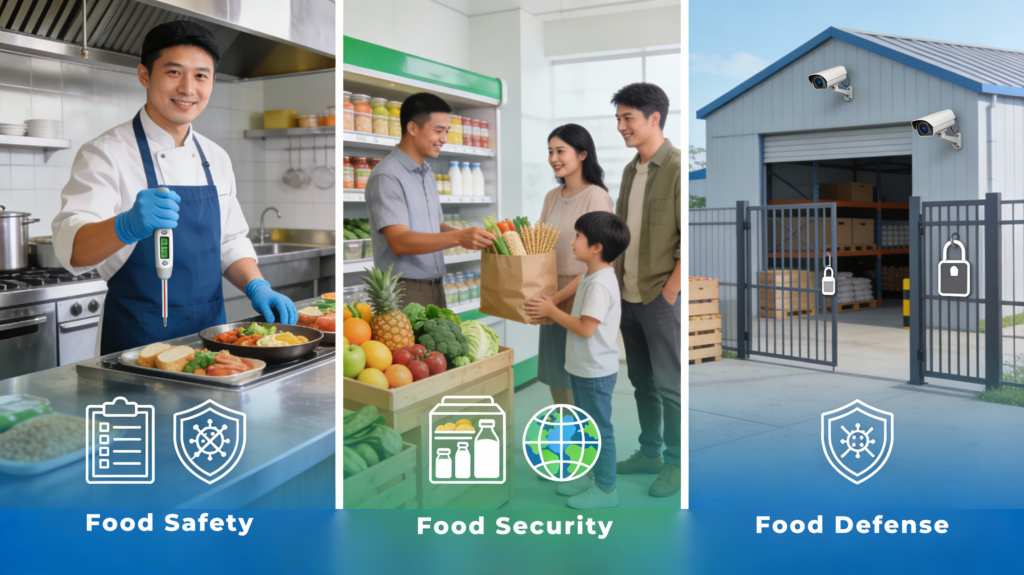
When people ask “what is food safety?”, they are usually talking about preventing unintentional contamination that can cause foodborne illness or injury. Food safety includes controlling biological, chemical, and physical hazards through proper handling, cooking, cooling, and storage practices.
Food safety programs rely on tools such as HACCP plans, temperature control, cleaning and sanitizing, allergen management, and food handler training to reduce the risk of pathogens and other hazards from farm to table.
What Is Food Security?
The question “what is food security?” focuses on access rather than contamination. Food security means that all people, at all times, have physical, social, and economic access to enough safe and nutritious food to support an active and healthy life.
Food security rests on four dimensions: availability of food, people’s ability to obtain it, proper use of food for good nutrition and health, and stability over time so temporary crises do not cut communities off from what they need.
What Is Food Defense?
“What is food defense?” is about intentional, not accidental, threats. Food defense protects the food supply from deliberate contamination or adulteration designed to cause harm to public health, damage brands, or disrupt the economy.
Food defense plans may include vulnerability assessments, controlled access to facilities, monitoring and surveillance, tamper‑evident packaging, and emergency response procedures required by regulations such as the FDA’s Intentional Adulteration rule under FSMA.
How Food Safety, Food Security, and Food Defense Connect
The difference between food safety and food security is important, but both are linked: a community is not truly food secure if the food it can access is unsafe to eat or easily tampered with. Food defense strengthens this foundation by protecting the food system from intentional attacks.
When food businesses and policymakers coordinate food safety, food security, and food defense efforts, they move toward a comprehensive “food protection” approach that supports public health, consumer trust, and long‑term resilience in the food supply.
Click here to register for the ServSafe Food Manager Course with OnFocus Solutions
and start or renew your food manager certification.
References: FDA Model Food Code (2022), U.S. Food and Drug Administration.
© 2025 Food Safety Insights Blog | Written by On Focus Solutions